Blog
AI Beauty Tech: What's Real Now, What's Still in the Lab
AI beauty puts AI, machine learning and AR into the cosmetics business: skin analysis, marketing, product development and retail. The four areas that come up most, sorted by how real they are today.
AI beauty is the umbrella term for putting AI, machine learning and AR into the cosmetics business: skin analysis, marketing, product development and retail. Here are the four areas that come up most, sorted by how real they are today.
1. Skin analysis: real, with limits
Snap a selfie and software assesses visible concerns - pores, wrinkles, pigmentation - then recommends a routine. Tools like L'Oréal's Skin Genius ship in brand apps and in-store devices, and in January 2025 L'Oréal showed Cell BioPrint, a tabletop device that reads protein biomarkers from a cheek tape strip to estimate skin's biological age.
The limits matter. A phone photo captures what is visible; it cannot reliably establish something like hydration on its own, and lighting and camera quality move the result. It is a cosmetic assessment, not a medical diagnosis, and the routine it recommends conveniently points at the brand's own shelf. Useful as a starting map, not a verdict.
2. Virtual try-on: furthest along
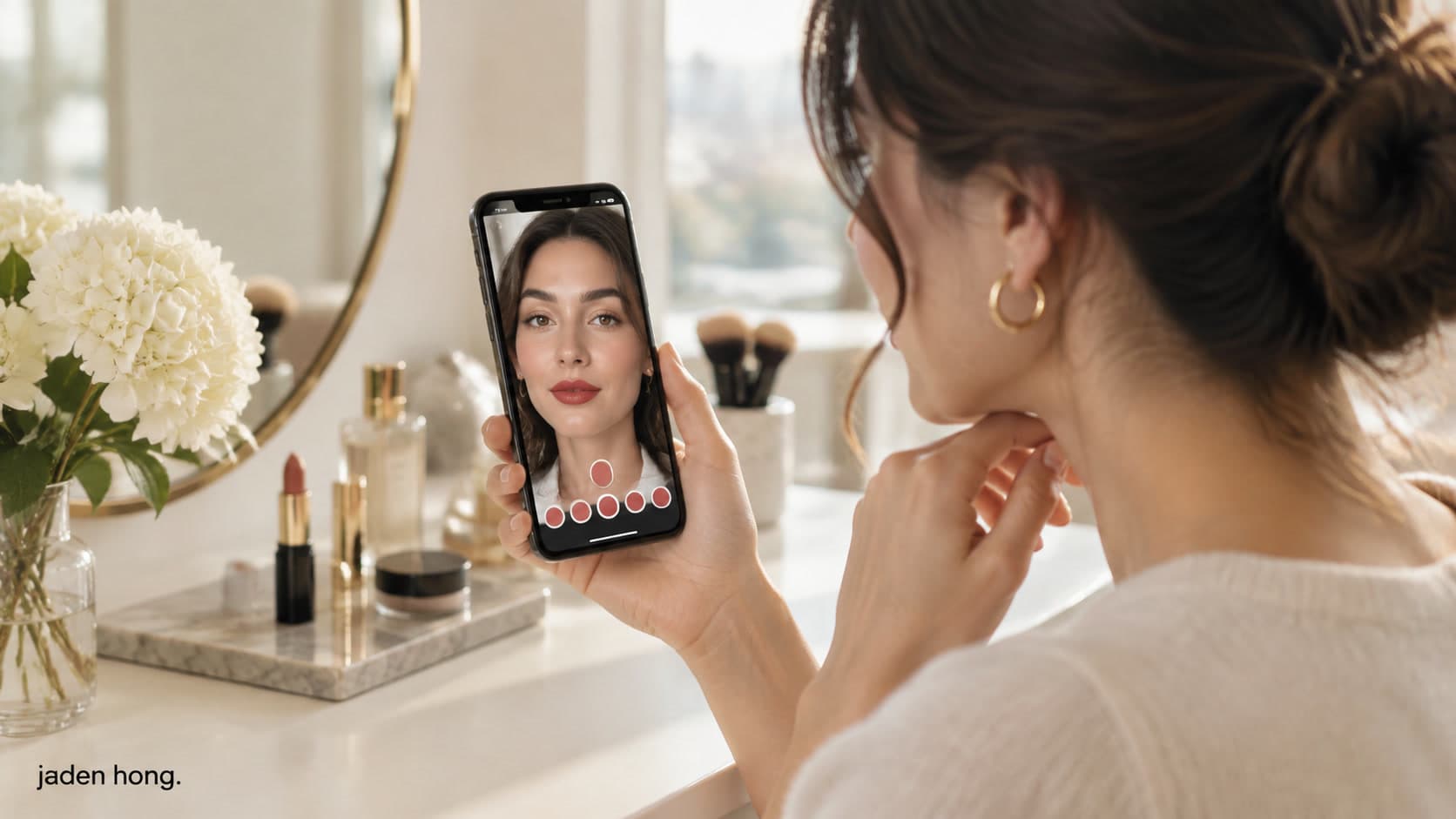
AR plus face tracking lets you test lipstick, foundation and hair color on your own face before buying. L'Oréal has offered it since acquiring ModiFace in 2018, and brands and retailers from Sephora to Nykaa have adopted similar tools - a sign of where the industry thinks this is headed.
It works best where shade is the question: color cosmetics. Some shoppers still find the overlay artificial, and a bad simulation hurts more than it helps.
3. Formulation R&D: real, behind the scenes
The least visible area. AI proposes candidate ingredients and formulations virtually - screening options and predicting properties like stability and texture - before lab work starts. Shiseido says its VOYAGER platform, running since February 2024, blends more than half a million data points from its researchers with AI to search and generate formulations.
The pitch is fewer trial-and-error cycles. Two caveats: the time and cost savings are mostly reported by the vendors and brands themselves, and AI does not establish safety. Every candidate still goes through lab and human testing before anything ships. This is an efficiency tool for companies with deep data, not a consumer feature.
4. Neuro-beauty: the experimental edge
The newest area reads emotional and biological responses, including EEG brainwaves, to recommend fragrances or skincare matched to your state. Real experiments exist: YSL's Scent-Sation has put an EEG headset on shoppers in select flagship stores and matched fragrances to brainwave reactions, testing firms sell EEG-based emotional measurement to brands for R&D, and academic studies keep finding measurable brain responses to fragrance.
So far this lives in flagship installations, R&D programs and studies, not everyday consumer products. Whether it scales is an open question. Worth watching, not worth building on yet.
How to read the claims
My read: sort AI beauty claims like any other AI pitch. Virtual try-on is the furthest along, skin analysis works within real limits, formulation R&D helps the companies with the data to feed it, and neuro-beauty is still proving itself. The closer the tech is to a clear customer problem like "which shade?", the more real it is. The closer it gets to reading your mind, the longer the wait.