Blog
One Person, Many Streams: My Take on Where AI Is Taking Work
A Korean infographic about 12 markets got me thinking about where work is heading. My personal take: the AI era pushes careers toward freelancing and multiple income streams, and the data is more mixed than the hype.
One Person, Many Streams: My Take on Where AI Is Taking Work
A Korean infographic has been making the rounds: "12 markets the elite are quietly starting businesses in." The list is catchy marketing, and I can't vouch for the "elite" framing. But the question inside it is the right one: not which businesses are being cut today, but which markets machines won't easily replace tomorrow.
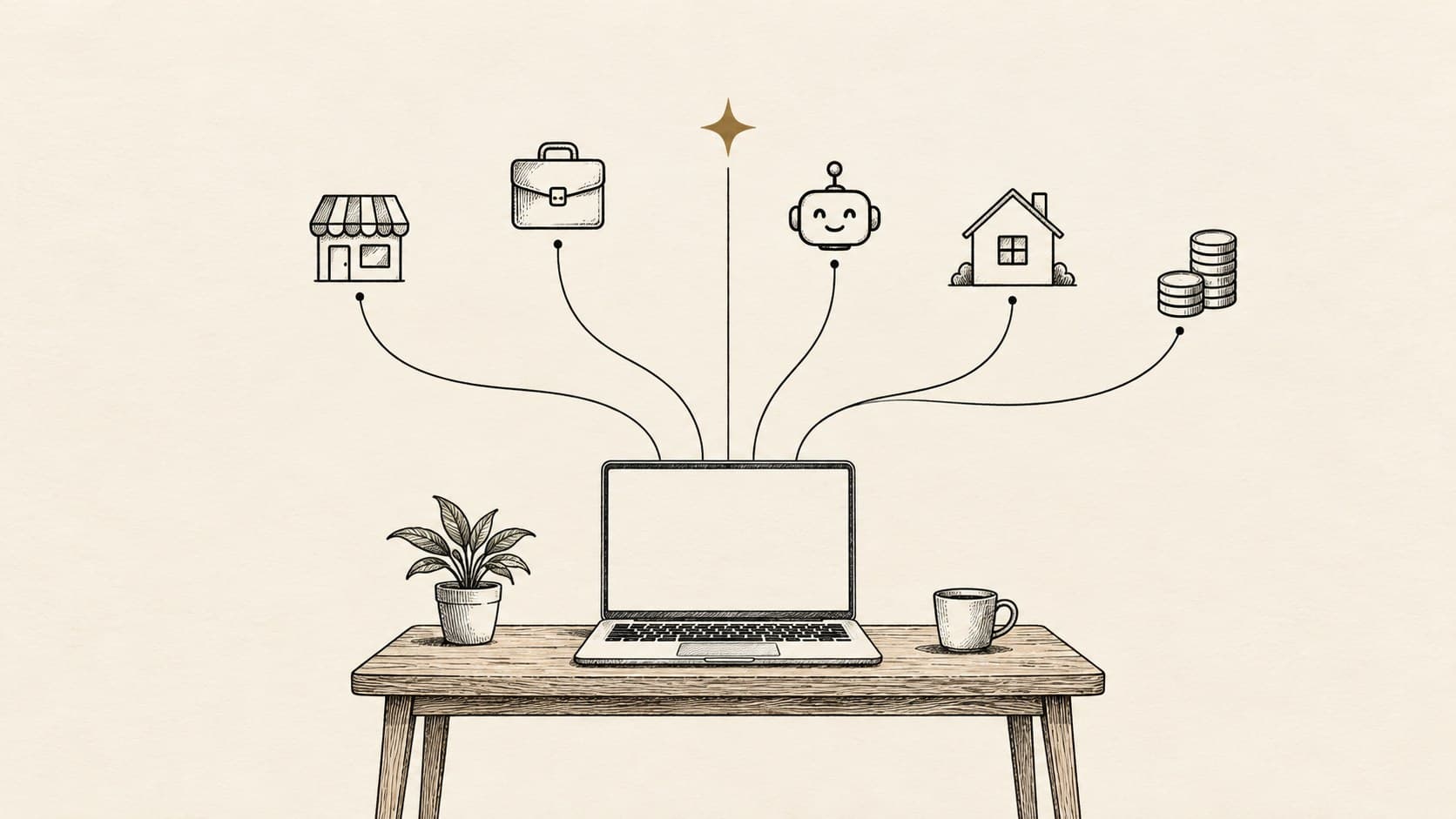
That question is how I think about work right now. So this post is my personal take, not a trend report: the AI era is pushing careers away from one job and one paycheck toward freelancing and several streams of income. I think most knowledge workers end up running some version of a portfolio, whether they planned to or not.
What I think is changing
For most of my life, the deal was simple: one employer, one salary, one ladder. AI breaks that deal from both ends. Companies need fewer people for routine work, because one person with good AI tools can cover what used to take a small team. And the same shift makes it realistic for one person to serve several clients, or run several small businesses, at once.
When the cost of doing work drops, work gets bought in smaller pieces: by the task, the project, or the subscription instead of by the year. That is the change I mean. Not everyone quitting their job tomorrow, but the center of gravity moving from "employee" toward "operator of your own small portfolio."
What the numbers say so far
My read is an outlook, so I want to hold it against actual data:
- Upwork's 2025 Future Workforce Index found that 28% of US skilled knowledge workers already work independently, generating $1.5 trillion in earnings in 2024. That is a base, not a forecast.
- McKinsey's 2025 State of AI survey says nearly nine in ten organizations now use AI regularly, but most are still early in scaling it. The compression of routine work I described has mostly not happened yet, which is exactly why I call this an outlook.
- And the honest counterweight: Bankrate's 2025 survey found 27% of US adults have a side hustle, down from 39% in 2023. Side work is common, but it is not an unstoppable wave. Economies push back, people get tired, and most side hustles stay small.
So the shift is real, partial, and uneven. I would distrust anyone who sells it as guaranteed.
Where the infographic is pointing
Back to the 12 markets. Translated, the list reads: digitizing legacy industries, affluent seniors, B2B cost cutting, compliance automation, burnout and wellness, one-person households, AI agents sold as employees, chore outsourcing, decision services, premium kids' services, rental over ownership, and back-office help for small businesses.
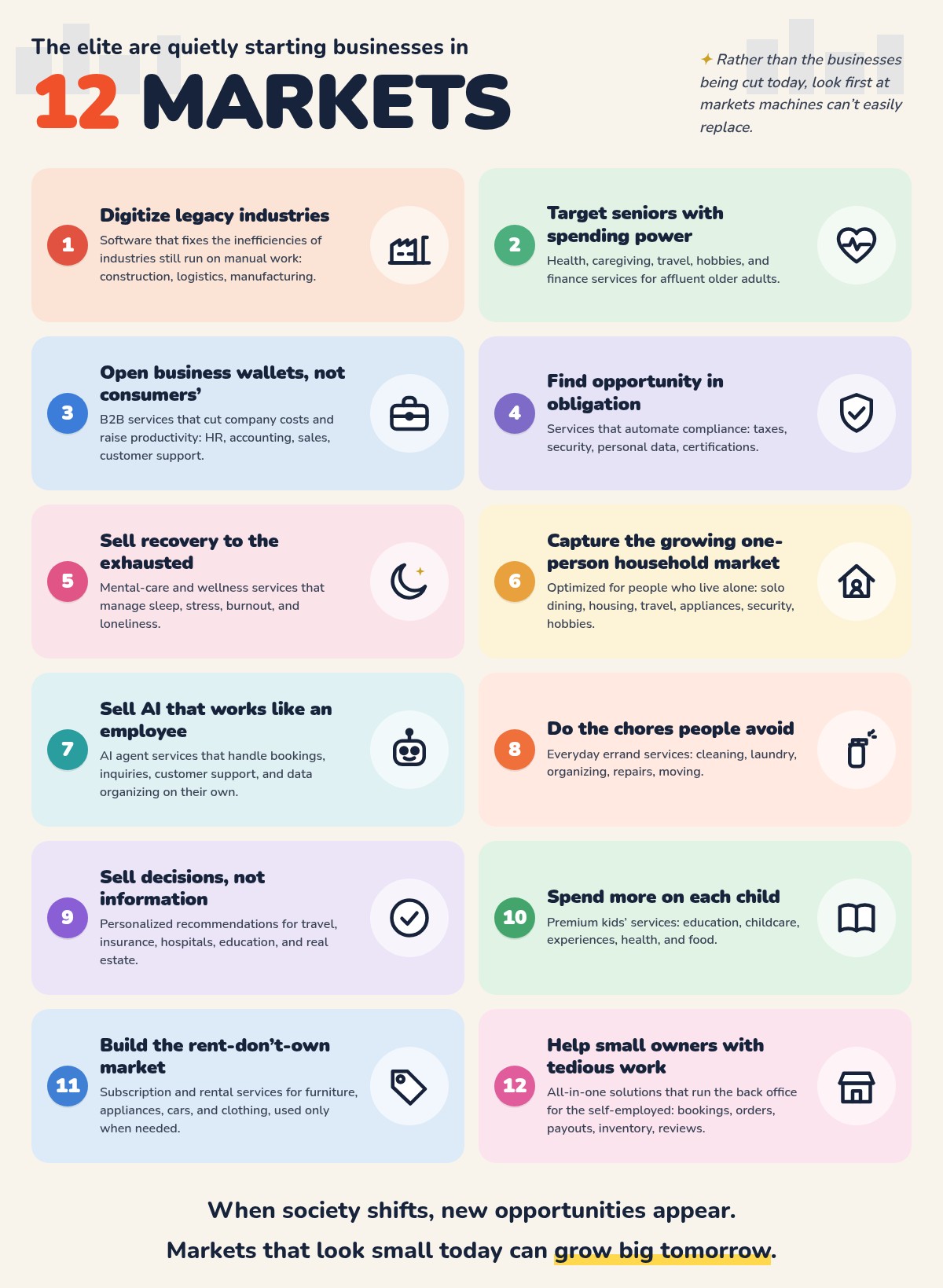
Strip the hype and I see one pattern: every market on that list sells trust, coordination, or physical presence. Those are the things machines still do badly on their own. The play is not to compete with AI inside these markets. It is to be the person who runs AI inside them. Market number 7, selling AI that works like an employee, is the perfect example: the product is AI, but the business is still a human finding clients, earning trust, and standing behind the work.
Some of these markets are also bigger than they look. One-person households are now 29% of all US households, up from 20% in 1975, per the Census Bureau. That is 39.7 million households buying for one.
What this means for how I work
I build AI automation systems, so I live a version of this already. My bet: the people who do well in the next decade will not be the ones with the most credentials. They will be the ones who learn to run several small streams with AI doing the routine parts, and who keep their name and judgment attached to the output.
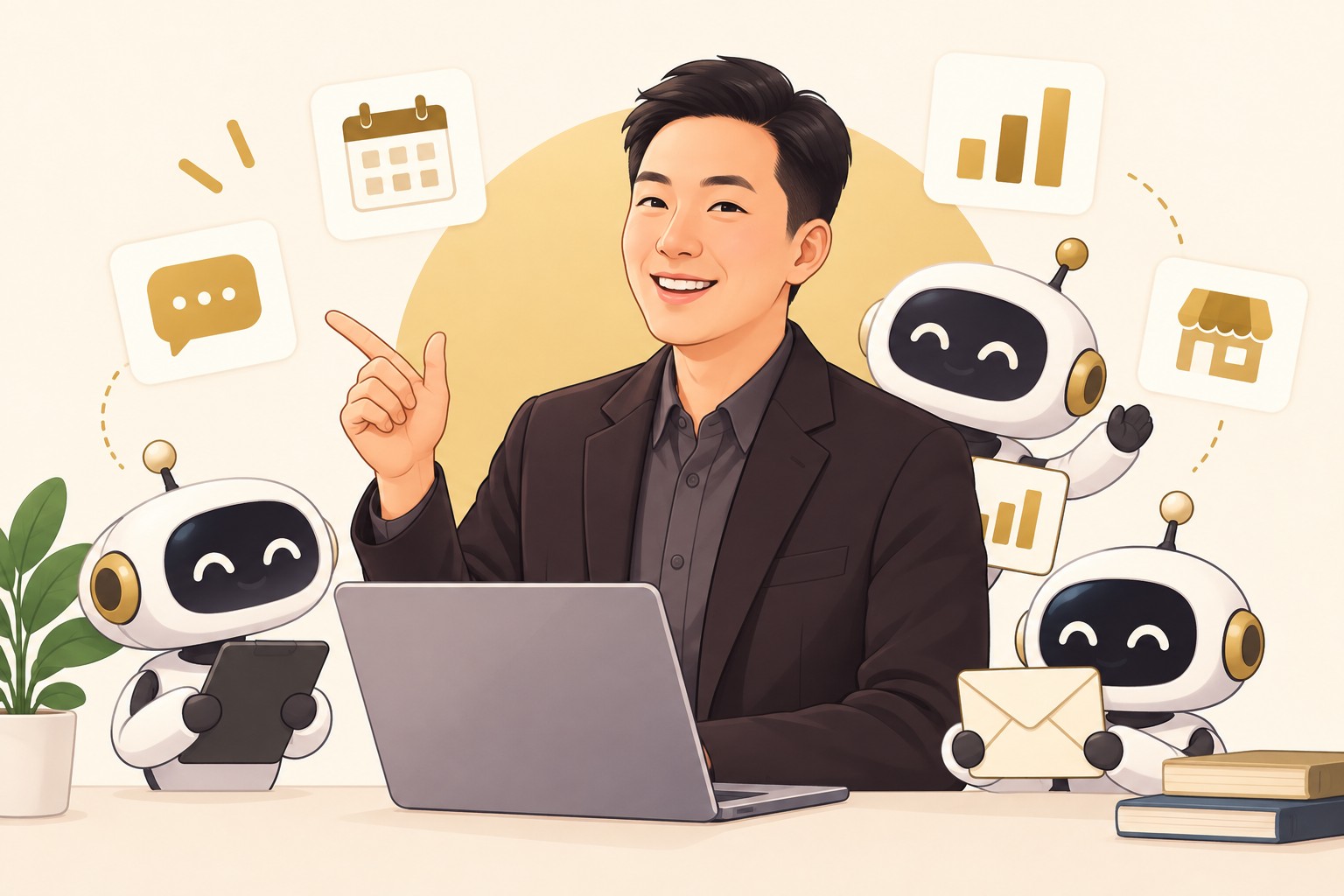
That is also the honest caveat. Multiple streams are not guaranteed income. A stream is a small business, and most small businesses fail. Starting three of them with AI help is still starting three businesses. I am not saying quit your job. I am saying the skills that make a one-person portfolio work (selling, delivering, and directing AI) are worth building now, inside or outside one.
The infographic ends with a line I agree with: markets that look small today can grow big tomorrow. I would add one thing. The people who benefit are the ones who practiced early, while the market still looked small.