Blog
AI Phone Agents for Restaurants: What They Cost Before the Holiday Rush
We compared four AI phone agents built for restaurants - Maple, Slang AI, Loman and Hostie - on price and fit, plus a simple formula to see if one pays for itself.
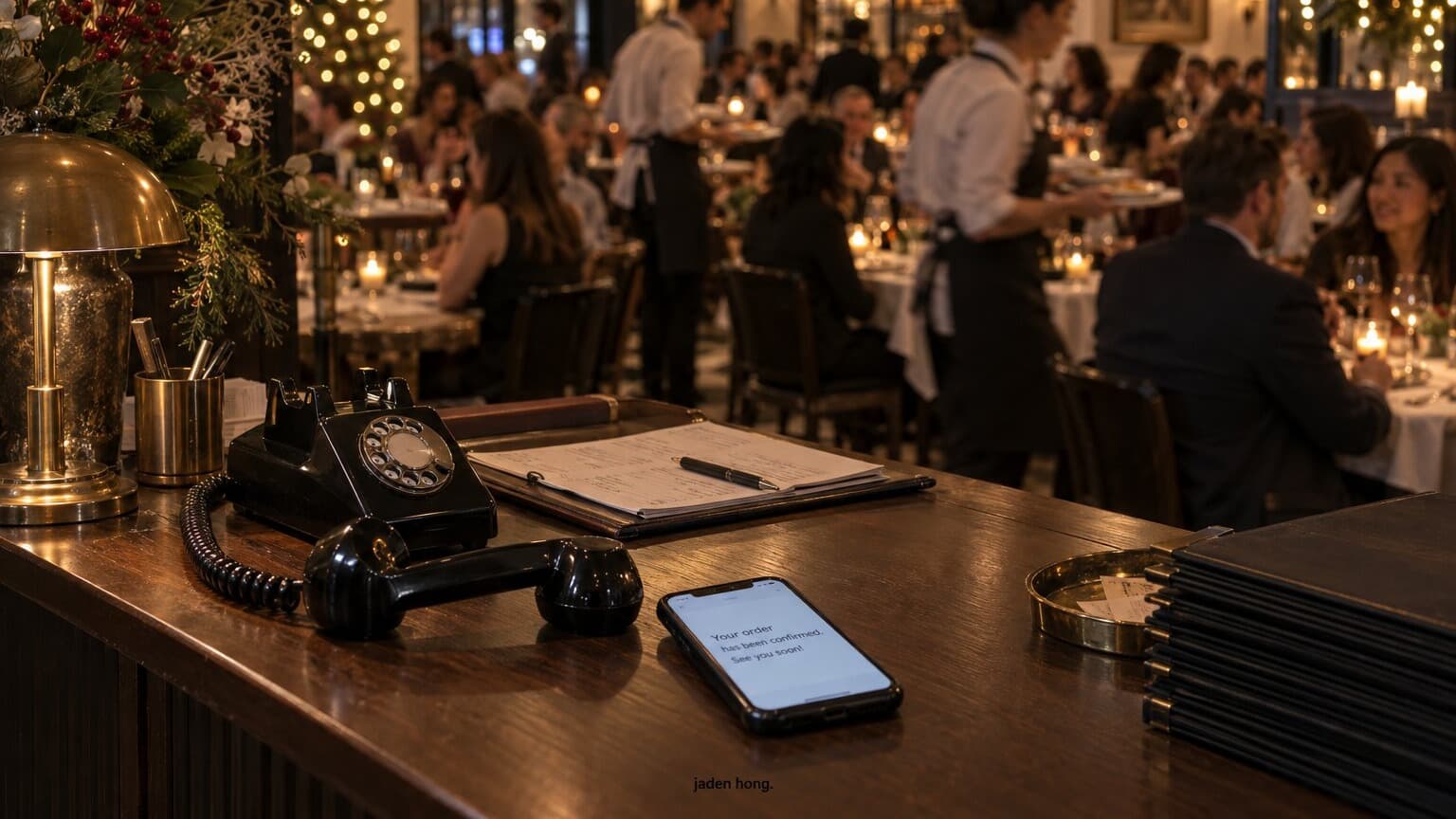
The holiday rush is when your phone rings the most and your team has the least time to pick it up. Every call that goes to voicemail at 7pm on a Friday is a takeout order or a table that may go somewhere else.
AI phone agents are built for exactly that moment. They answer every call, and depending on the plan, take the order or the reservation and text the guest a confirmation, so your host can stay on the floor. I looked at four vendors that sell them to restaurants and checked each one's own pricing page on October 30, 2026.
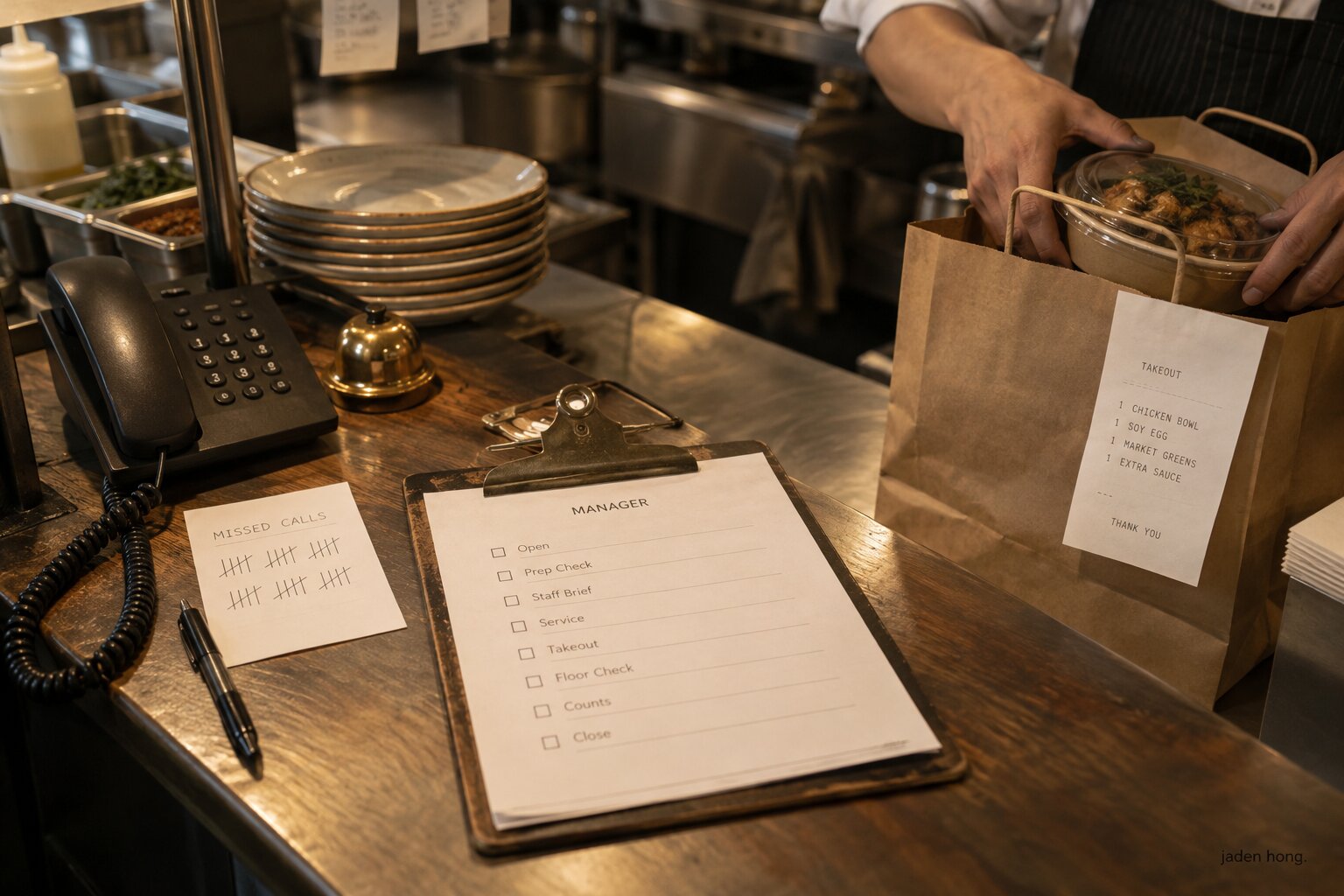
A note on the numbers: you'll see a lot of industry stats about how many calls restaurants miss. They vary widely and I couldn't verify any of them, so the best number to use is your own. Count one week of missed calls before you buy anything.
What each one costs
Maple: the lowest posted price
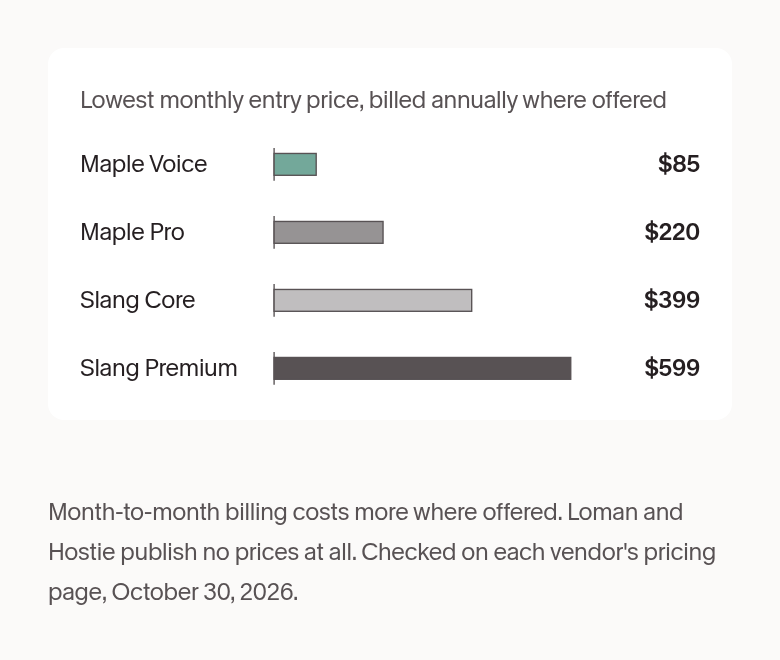
Maple has the cheapest public entry point of the four.
- Maple Voice: $85 a month billed annually, or $150 month to month. It answers calls and common questions only. No ordering or reservations.
- Maple Pro: $220 a month billed annually, or $350 month to month. It takes phone orders straight into Toast, Square, Clover and SkyTab, books OpenTable reservations, and sends order confirmation texts.
- No per-minute fees and unlimited minutes. The page doesn't say whether pricing is per location or per account, so ask.
Slang AI: built around reservations
If bookings drive your calls more than takeout, Slang is the one to look at.
- Core: from $399 per location. Reservation management with full reservation integrations, bilingual support and text links.
- Premium: from $599 per location. Adds real-time alerts, a smart inbox, direct texting and private-events capture.
- Enterprise: custom pricing. Billing frequency isn't shown.
Loman and Hostie: quote only
Both sell restaurant phone agents but don't publish prices. Loman offers Starter and Premium plans; Starter handles up to 50 calls at once. Hostie offers Essential, Premium and Hospitality Plus, covering AI phone, texting and reservations.
No public price usually means a sales call and a number you can negotiate. Ask for a month-to-month trial before you commit.
The math that decides it
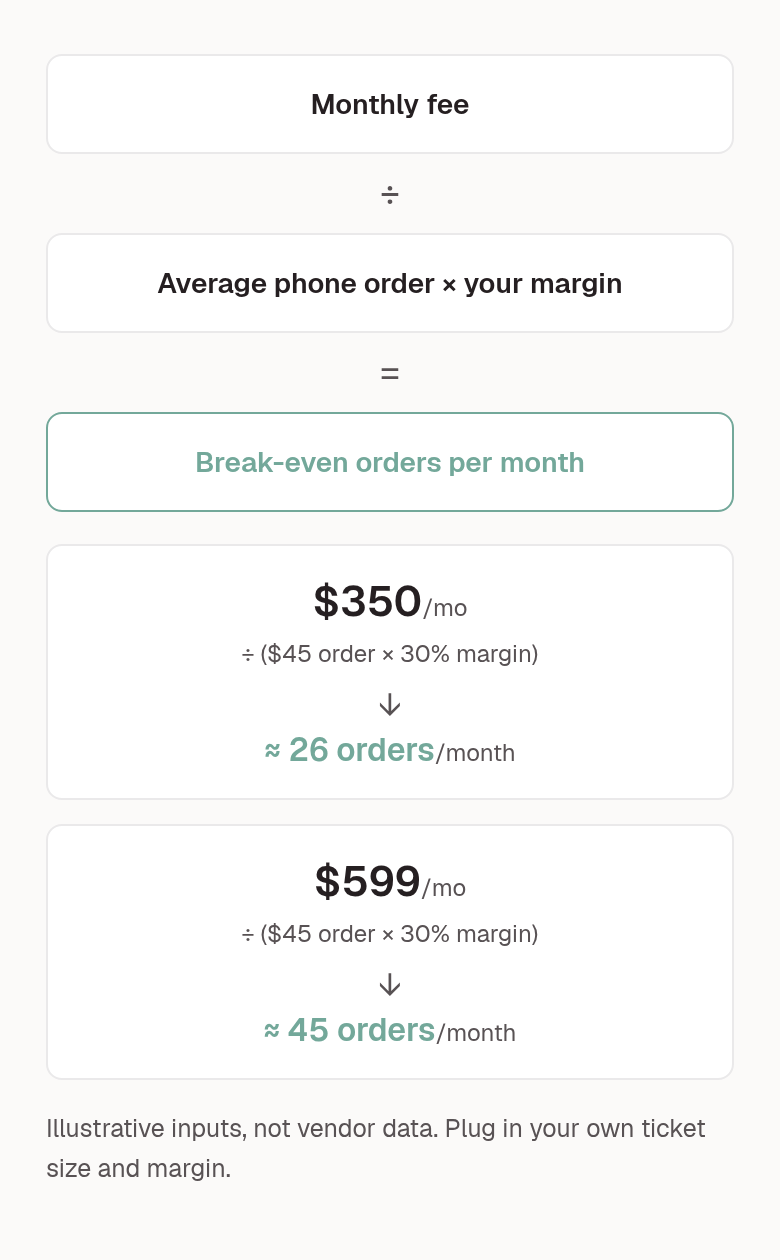
With a $45 average order and a 30 percent margin, covering the fee takes about one to one and a half recovered orders a day. The formula:
The bigger picture
On October 8, Google announced it is turning Gemini into an agent that plans and runs tasks across business apps, starting with businesses. General-purpose agents are coming fast. But for the phone line, restaurant-specific tools that already connect to your POS and reservation system are the ones you can use today.
How to pick
- Mostly hours, directions and "are you open" calls: Maple Voice.
- Phone takeout into Toast, Square or Clover: Maple Pro, then get a Loman quote to compare.
- A reservation-heavy dining room or private events: Slang Core.
Before you sign anything: count a week of missed calls, ask about setup fees (none of the four list them), and test it on your own menu during a busy shift.
If you want help running the break-even for your restaurant, send me your weekly call volume and I'll work it out with you.
Read next

Blog
LegalZoom's Free AI Assistant Knows Your Actual Business
LegalZoom launched a free AI assistant that answers from your actual business record, not generic advice. What it does, what it costs, and where it fits for a small operator.

Blog
Canva Brush Edits Your Whole Design From One Prompt
Canva launched Brush, a model that edits existing designs from plain-language requests. What it does, who gets it now, and where small operators should stay skeptical.

Blog
GitHub Copilot Fusion: It Picks the AI Model So You Don't Have To
GitHub made Copilot Fusion generally available on October 28. It routes every coding task to the models it chooses. What that changes for cost, control, and how you review AI work.