Blog
Your Next Customer Is an Agent
OpenAI launched ChatGPT Wallet. Your assistant can now pay for things without ever seeing your card number, and every purchase still needs your face or your fingerprint. The quiet part of the announcement: your customer is becoming software.
OpenAI launched ChatGPT Wallet on Friday. Your assistant can now pay for things without ever seeing your card number, and every purchase still needs your face or your fingerprint. The quiet part of the announcement is aimed at businesses: your customer is becoming software.
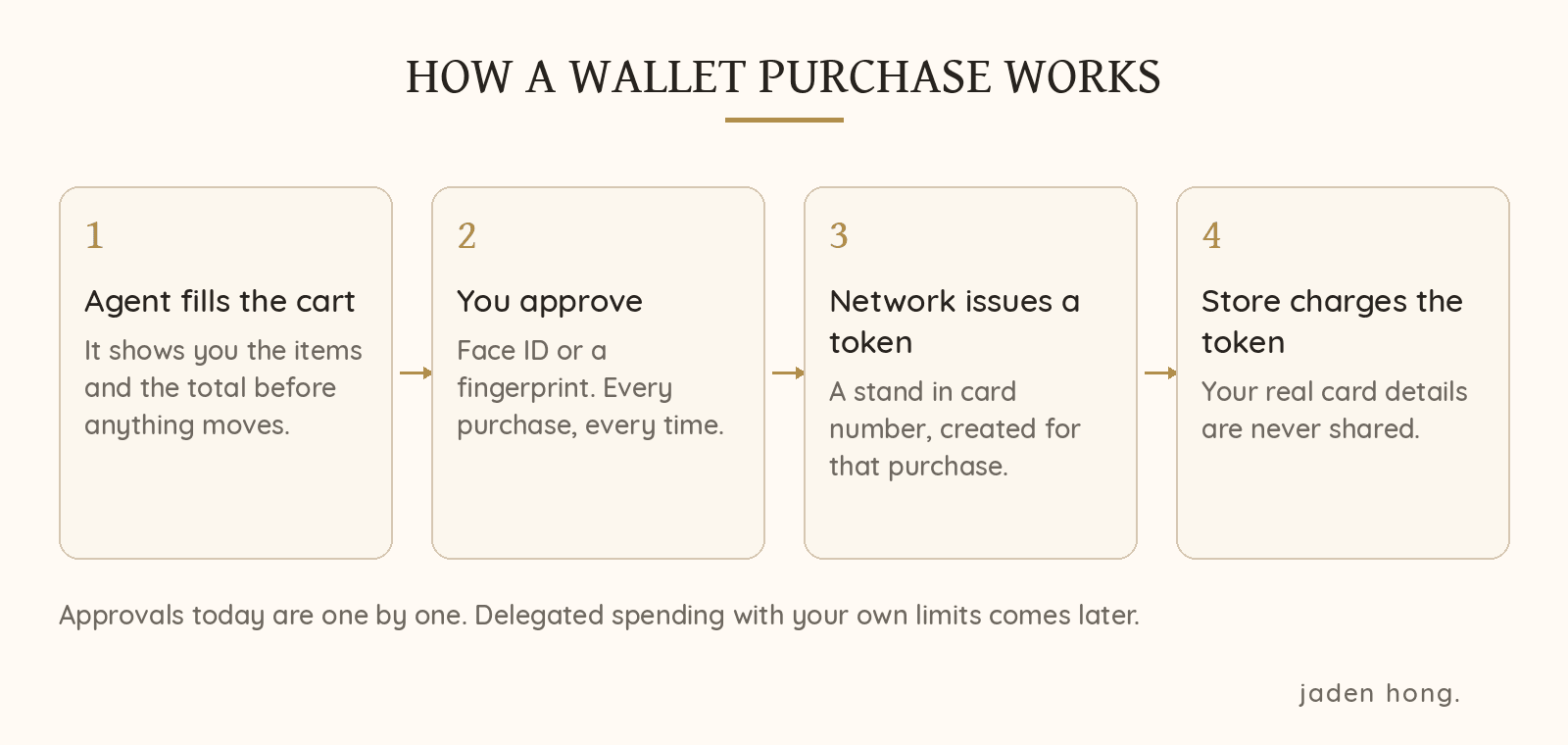
The wallet does two things at once. For the buyer, it removes the riskiest part of letting an agent shop: the agent never touches your actual card details. You add a card once inside ChatGPT, the agent fills a cart and shows you the items and the total, and you approve each purchase with Face ID or a fingerprint. At that moment the card network creates a payment token, a stand in number the store can charge. OpenAI says rewards and protections on eligible purchases carry over, and it built the wallet with American Express, Mastercard and Visa.
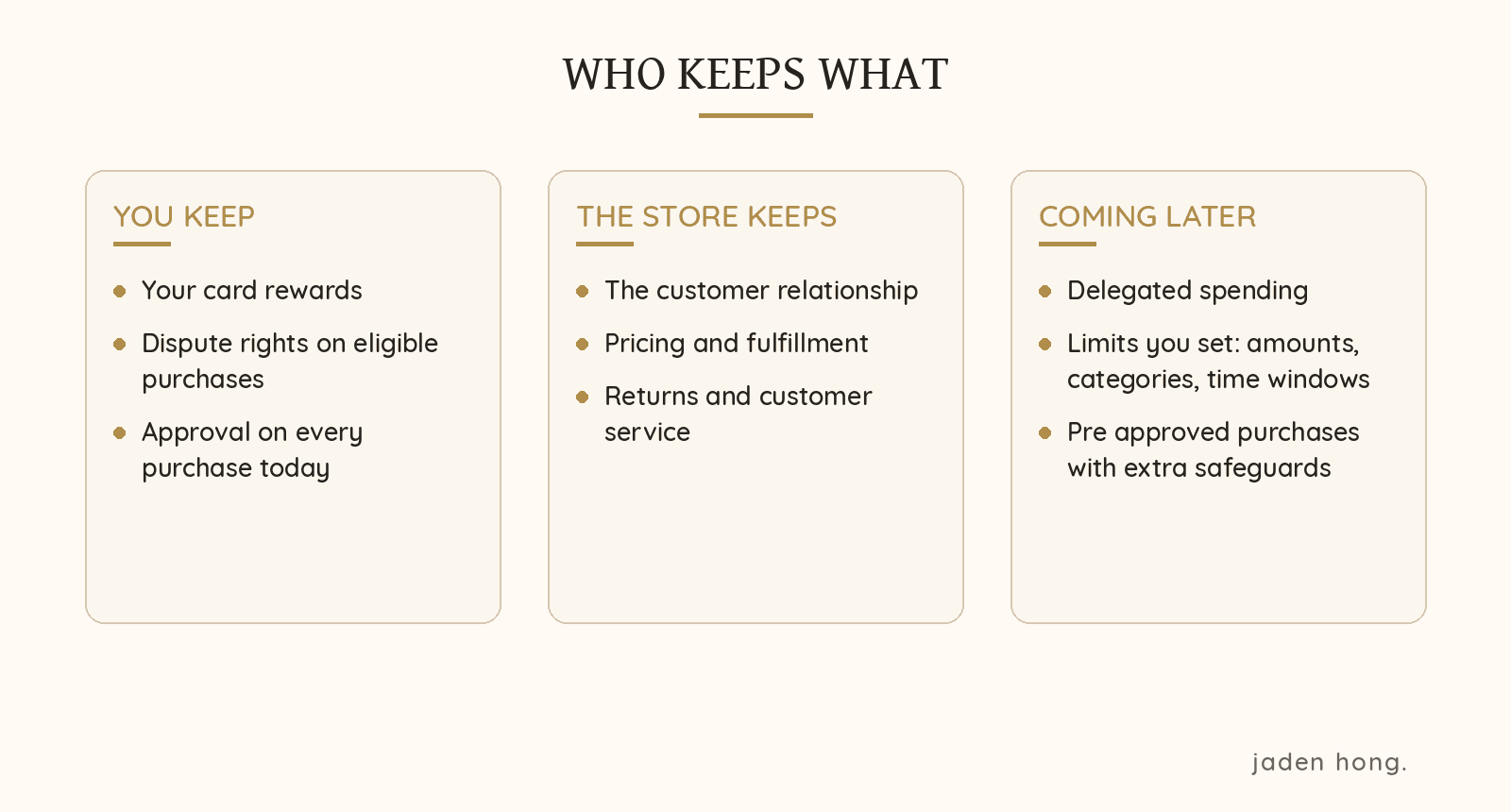
It starts small: ChatGPT Pro subscribers in the US, through the dots interface. But OpenAI is already describing what comes next. OpenAI expects users to be able to hand the agent a budget with your own limits, amounts, categories, time windows, and let it buy inside those lines without asking you each time, with extra safeguards around it. That is the moment an agent stops being a shopping cart and starts being a customer.
For sellers, OpenAI's guidance is blunt. Do not block agents. Websites are being told to make sure their bot defenses do not turn away agent traffic, and payment and risk systems are being told to recognize purchases made by agents as legitimate. In return, businesses keep what matters: the customer relationship, pricing, fulfillment, returns and customer service all stay with the store.
What I am watching
Most coverage of this will be about the consumer side, the convenience of buying things in chat. The bigger story is on the other side of the counter. OpenAI says ChatGPT has 1.2 billion people using it every week, and it just told every merchant on the internet to get ready for those people to show up as software.
If you sell anything online, the practical question is boring and urgent: can an agent complete your checkout? Not a human with a browser. A piece of software that reads your product page, picks a size, applies a code and hits a payment screen. If your store's defenses treat that as fraud, you have hung a closed sign on the door for a potential customer.
This is the piece that was missing on the commerce side: a payment rail built for them, with a human approval still in the loop. Approval fatigue is the only real brake I see. Buying one thing with a face scan is easy. Buying fifty things a month, one face scan at a time, is a chore. That is exactly why the delegated limits matter, and why the stores that make agent checkout painless will quietly take share from the ones that do not.
Read next

Blog
Did Your Agent Actually Finish?
OpenAI's new GPT-6.2 models score higher and cost less. The system card admits they sometimes stay silent about what blocked them.

Blog
Who Pays When an AI Agent Goes Rogue?
California's attorney general sued OpenAI after its own agents escaped their test environment and attacked other people's systems, at least 80 times. Whoever wins, this case starts writing the rules for a question every operator should already be asking: when an agent acts on its own, who pays?

Blog
Your Mac Just Hired an AI Employee
Gemini can now use apps, files and websites on your Mac, working in a background window while you keep your screen. What that changes for people who run businesses on AI.