Blog
Congress Flipped. What the Midterm Map Actually Says.
Democrats took the House and the Senate on November 3. The called races, the seven flipped seats, and what changes in January.
Voters handed Democrats both chambers of Congress on November 3. Republicans went in holding the House and the Senate. The Associated Press called both flips on election night, and the map behind them is worth slowing down for.
First, the scoreboard. Democrats moved from the minority to 54 seats in the Senate, a net gain of seven, and to at least 231 seats in the House, a net gain of 29, with some races still being counted on Wednesday morning.
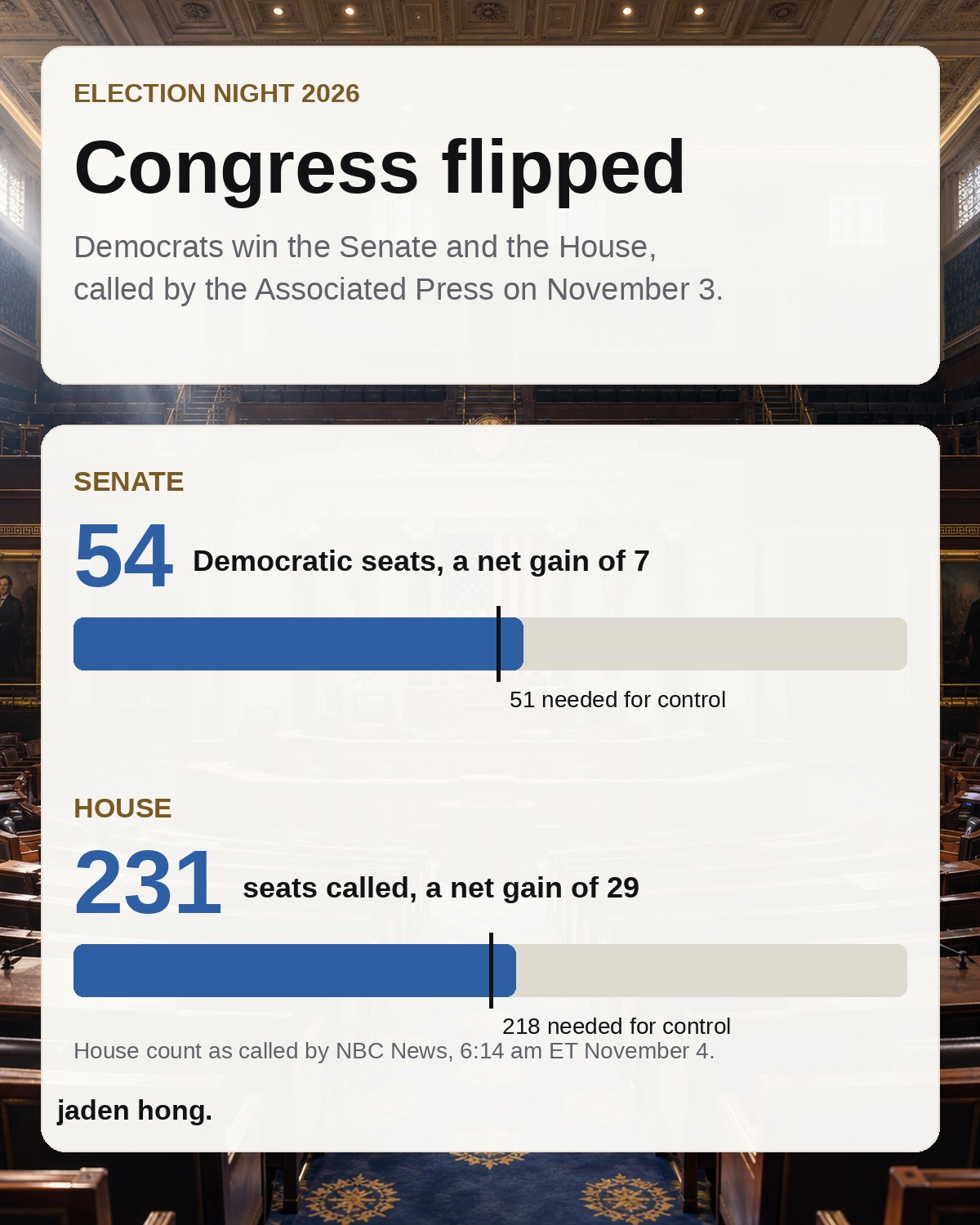
54 Senate seats against 51 needed for control. 231 House seats called against 218 needed.
Seven states moved a Senate seat from Republican to Democrat. Kansas elected a Democratic senator for the first time since 1932. Georgia and Michigan stayed Democratic.
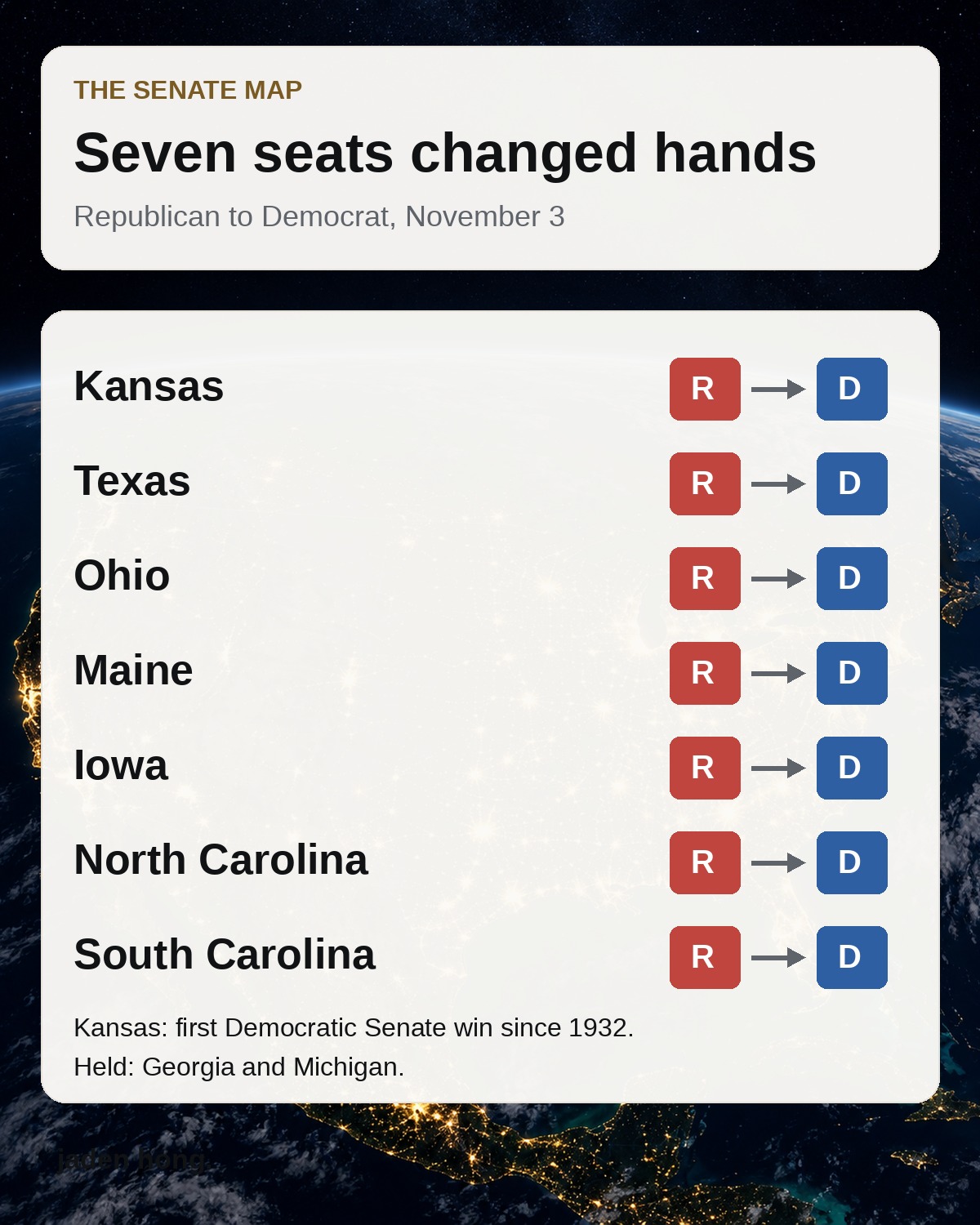
Kansas, Texas, Ohio, Maine, Iowa, North Carolina and South Carolina, all moving one way.
Governors moved the same way. Five states flipped their governor's office from Republican to Democrat, giving Democrats a majority of the nation's governorships for the first time in well over a decade. Texas elected Gina Hinojosa over the incumbent. Georgia elected Keisha Lance Bottoms, the first Black woman elected governor in US history.
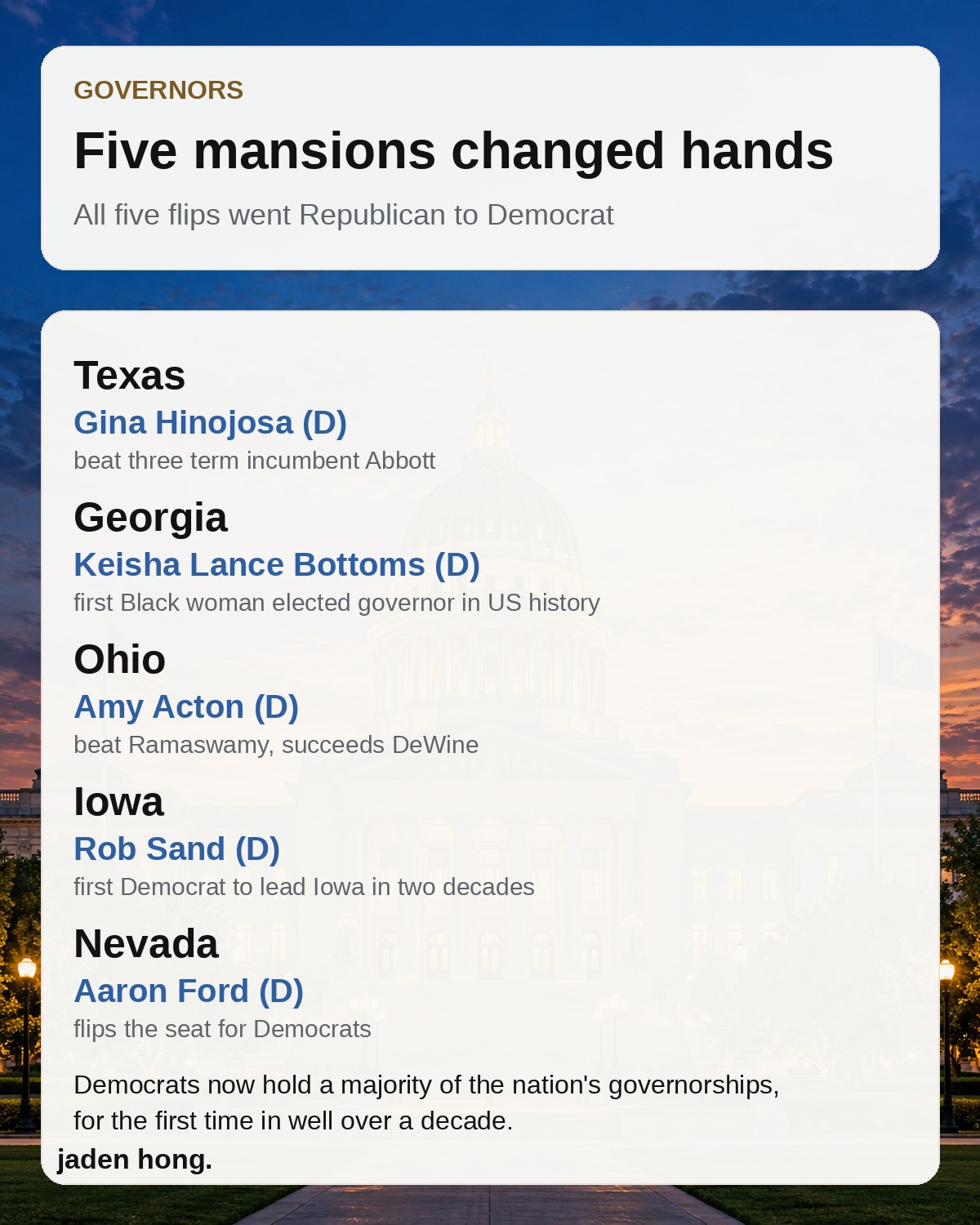
Texas, Georgia, Ohio, Iowa and Nevada, all moving one way.
Georgia stayed blue by 18 points and Texas flipped by 12. Ohio flipped by 5, and Maine was called for the Democrats with 86% of the vote counted.
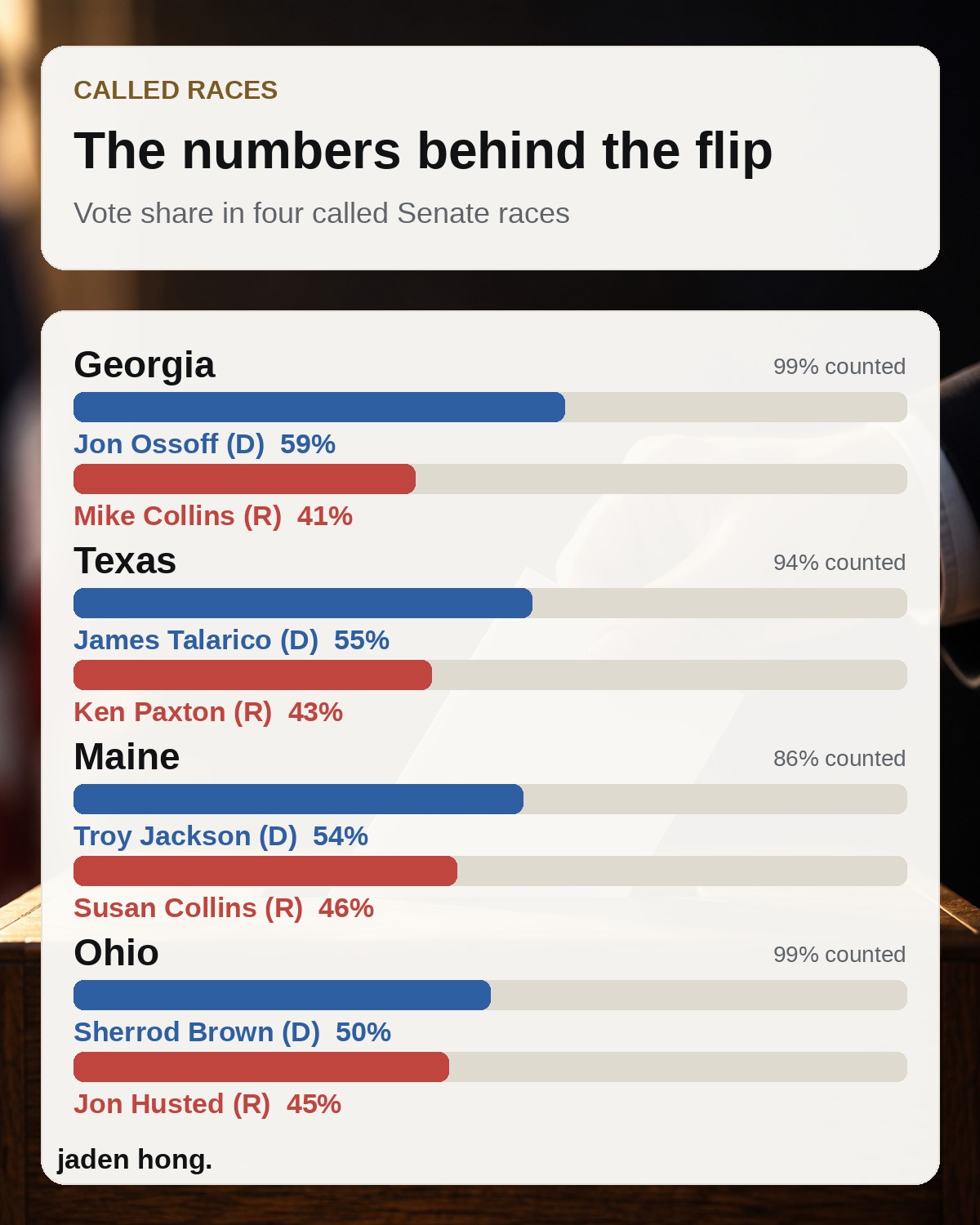
Called races and their margins as of Wednesday morning.
Why it happened: election night reporting points to three drivers. High prices, the Iran war, and concern about government corruption. The president's own response was gracious. "Congratulations to the Democrats," he told Fox News. "I think they did a good job."
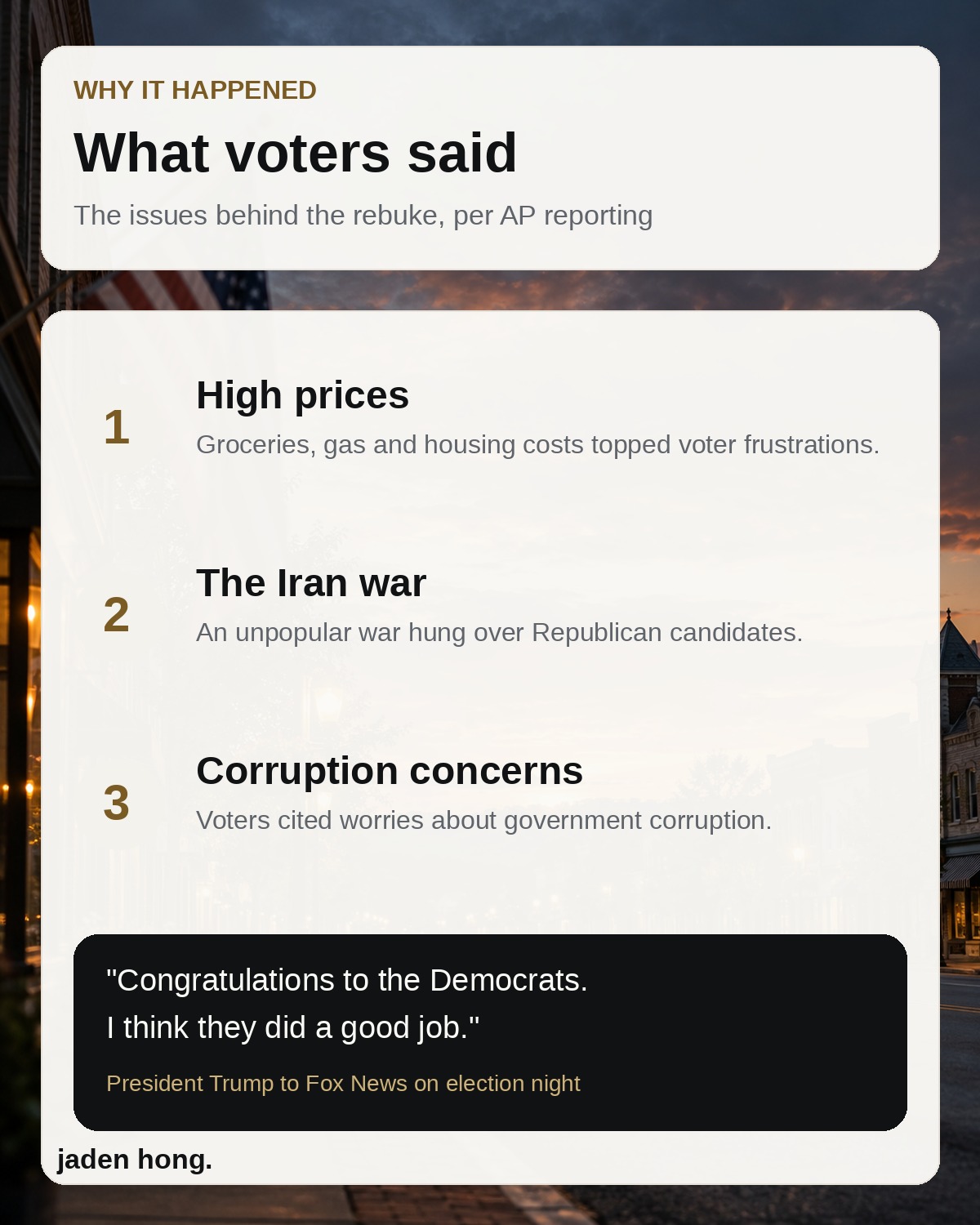
Three issues topped the list, and the president conceded the night.
What changes in January
Democrats will run the committees and set the floor agenda in both chambers. Expect oversight hearings, subpoenas, and a much slower path for anything the White House wants from Congress. Divided government rarely produces big legislation. It produces gridlock and investigation.
What it means for owners (Jaden's take)
Gridlock is underrated if you run a business. Big policy swings get harder, which means fewer surprise rule changes to plan around. The issues voters cited, prices above all, do not change with a gavel. My read: expect a louder Washington and a slower one, and keep your plans pointed at your customers, not the news cycle. One caveat: the final House margin is still being counted, so treat the exact seat numbers as a moving picture, not a settled score.
Figures are the called results and network counts from the morning of November 4, 2026. Races still counting are labeled.
Read next

Blog
ChatGPT Is Now a Fifth of Google Search, OpenAI Says
OpenAI says ChatGPT now runs one fifth as many searches as Google. What that number actually counts, why it still is not website traffic, and the three checks a small business should run this week.

Blog
7 AI Skills Worth a Closer Look
Seven AI tools and skills worth reviewing for real work, with practical use cases and honest limits.

Blog
Your AI Account Is Now Worth Stealing
Google's incident responders say criminals are hijacking cloud AI access and reselling it, leaving victims with bills above $100,000 in a single day. How the scheme works and how to lock your accounts down.